
Slurry is essential for producing uniform, conglomerate‑free sugar crystals. By grinding sugar in alcohol, the SMAC slurry mill creates extremely fine, consistent nuclei that improve crystal quality, storage stability, washing performance, and tablet production across the sugar industry.
Understanding Conglomerates and the Role of Slurry
Dust and screened sugar naturally contain conglomerates. No matter how small they are, conglomerates continue to grow as conglomerates and never form into normal crystals. A footing made from dust or screened sugar will therefore always contain these irregular particles.
Conglomerates lack brightness and reduce the overall luster of the final product. They are also difficult to wash, causing syrup containing non‑sugars to remain in the crystals. As a result, the sugar becomes less stable and deteriorates more quickly during storage.
Even for raw sugar, producing conglomerate‑free crystals offers clear advantages: the sugar stores better and washes more efficiently during affination.
To achieve normal, uniform crystals, a footing must be seeded with conglomerate‑free nuclei. When white sugar is ground in denatured or isopropyl alcohol, all crystals—both normal and conglomerates—are reduced to very small fragments. Under a microscope, no well‑shaped crystals or conglomerates can be seen. Instead, the mass contains tiny, evenly sized crystal fragments. As they grow, these fragments naturally develop into normal, well‑formed crystals.
When used for seeding, this material can produce highly uniform crystals that are practically free of conglomerates. The particles are so small that a single charge provides enough nuclei for an entire pan. When working with high purities, it is even advisable to draw in sufficient nuclei for multiple strikes and transfer them to other pans, preventing the formation of conglomerates.
The required quantity depends on the pan capacity and the desired crystal size. For crystals of approximately 0.30–0.35 mm, 50 cc of slurry per 100 hl of massecuite should be drawn into the pan. Isopropyl alcohol is the most commonly used organic solvent, though denatured alcohol may also be used. Due to the flammability of these solvents, the slurry mill should be placed outside the laboratory.
The charge can be added at a low supersaturation (C = 1.05). Before reaching the intermediate zone, the nuclei will have grown to a size visible on a glass sample plate under an electric bulb.
Today, slurry is used in all types of strikes—from fine granulated refinery sugars to low‑grade molasses strikes. It is also widely used in the production of tablets and cubes. Slurry makes it possible to create crystals so small and uniform that tablets and cubes can be formed without mixing in smear or ground sugar. These products are bright, well‑shaped, and have minimal breakage, while also dissolving quickly. Factories that previously achieved less than 60% crystals in the main screening fraction now report more than 85% after adopting slurry. Dust and scalings requiring remelting have been reduced to nearly zero.
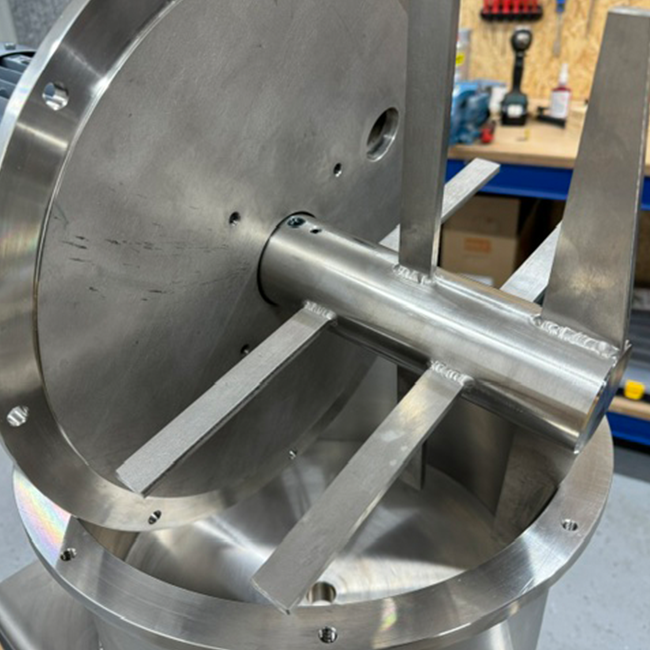
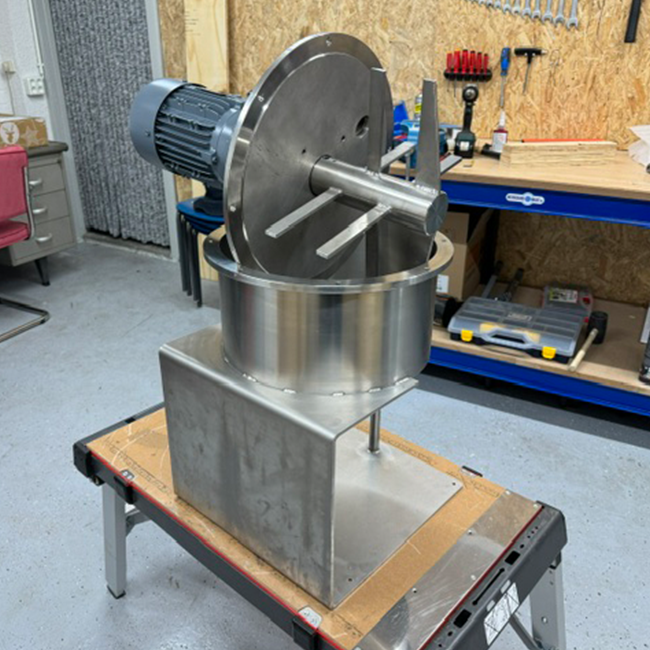
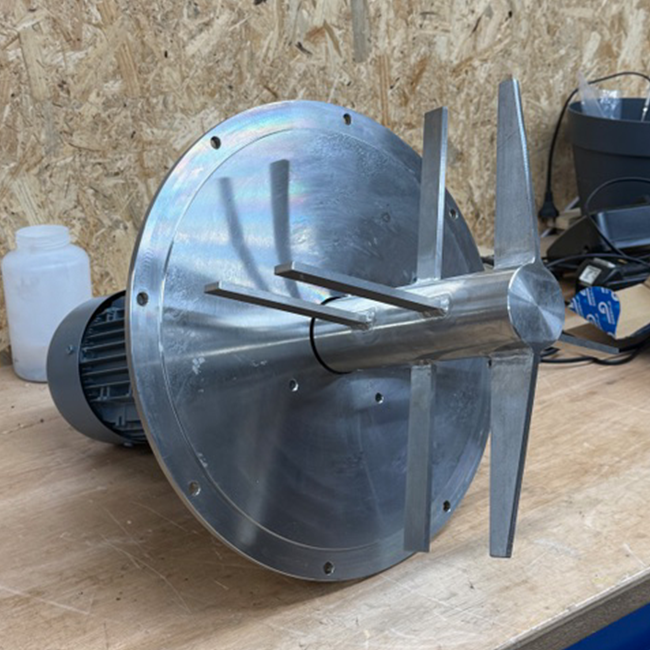
To produce slurry efficiently, we developed the SMAC‑10 slurry mill, with a batch capacity of 10 liters.
Instructions for Using the SMAC‑10 Slurry Mill
The SMAC‑10 slurry mill has a batch capacity of 10 liters.
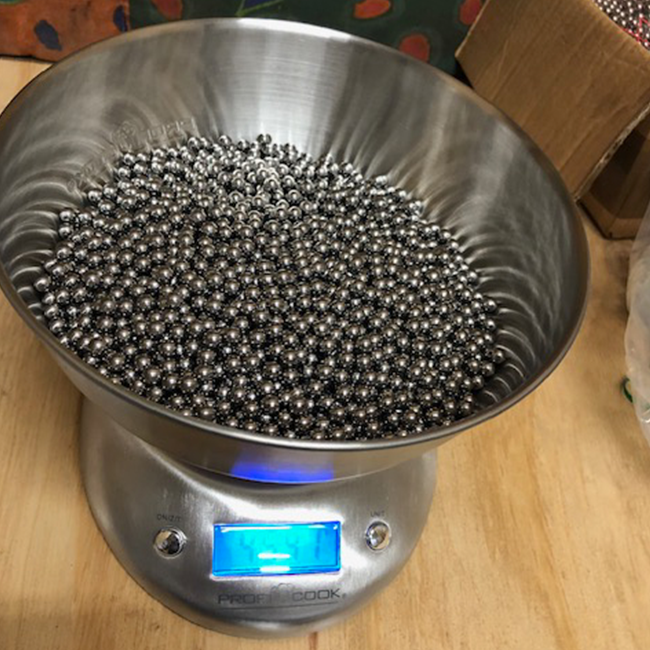
A standard batch begins with 8 liters of alcohol, followed by 4 liters of sugar crystals.
Before starting a new batch, the mill must be thoroughly cleaned with an organic solvent. The alcohol‑to‑sugar ratio should never be lower than 2:1. If the mixture becomes too thick, there will not be enough movement inside the mill, and the slurry will not discharge properly.
After settling, any excess solvent may be decanted.
Laboratory Report: Particle Size Distribution
A report from the Applied Sugar Laboratories Inc. (New York) shows the following results after 4 hours of operation of the SMAC mill:
| Size (microns) | Number | % of total |
| 1-5 | 58 | 40.0% |
| 6-10 | 44 | 30.0% |
| 11-20 | 35 | 24.1% |
| Over 20 | 8 | 5.5% |
Note: After 4 hours, the SMAC mill produces approximately 95% nuclei below 10 microns.
Today, more than 1500 slurry mills of this type are in use worldwide.